Your security manager updates the risk register on Monday. Wednesday brings a revision to a cloud access policy by a developer. By Friday, a revised security procedure has been uploaded, but the Statement of Applicability continues to reference the previous document.
At first glance, none of these changes looks serious. Yet these everyday mismatches can create serious difficulties when an ISO 27001 auditor starts examining the documentation. For startups, the challenge is often coordinating compliance work while the team is busy running the business.
When Spreadsheets Create More Work Than Expected
A spreadsheet is often the most familiar place to begin tracking compliance. They are also easy to duplicate, overwrite, or forget. A growing business may begin with several spreadsheets covering different compliance activities. Once multiple employees begin updating information or control owners change, the initial tracking method becomes harder to coordinate.
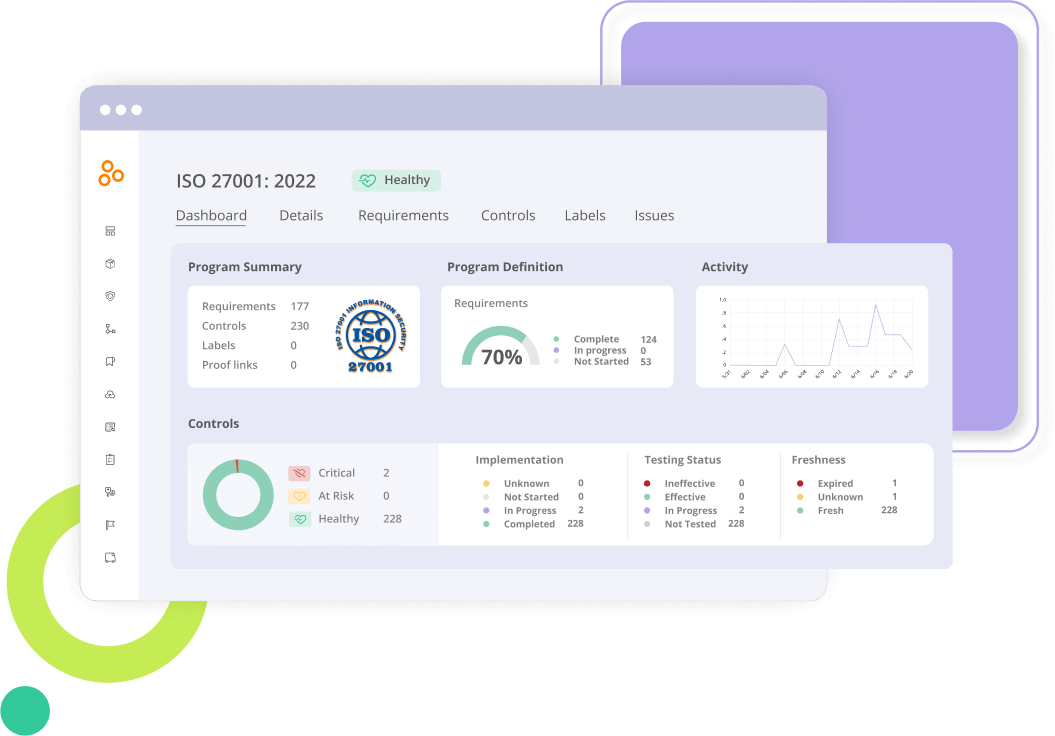
ISO 27001 compliance software offers an alternative by bringing related activities into a structured workspace. Team members can review a control’s status alongside supporting evidence without searching through unrelated folders.
What Startup Leaders Need to Know
A new subscription only helps if someone maintains it, so ask first: Who will be responsible for updates?
An eight-employee startup may need a less elaborate system than a large multinational organization. Founders may handle risk assessments, developers may maintain technical controls, and an operations manager may oversee documentation.
The right ISO 27001 software should clarify these responsibilities without adding complicated administrative tasks. Even a capable platform has limited value when the team stops using it.
The Statement of Applicability Needs Accurate Records
The Statement of Applicability serves a purpose greater than collecting signatures. The document records which controls are considered necessary, the reasons for those decisions, and their implementation status.
Using cloud infrastructure does not remove the need to consider applicable physical security responsibilities, even when the provider manages the underlying buildings.
Clear documentation should explain its security responsibilities. Linking the risk register with the Statement of Applicability helps an auditor trace control decisions to risks.
Preparing for the Auditor’s Questions
The audit may involve reviewing employee training records alongside risk treatment decisions. Finding the latest approved documents becomes unnecessarily slow when records are spread across several systems. Although ISO 27001 certification software can bring evidence together, it cannot promise a successful assessment.
Whether the information security management system meets the standard is evaluated by an accredited certification body. Well-organized documentation can support a smoother assessment.
How Growing Businesses Can Simplify Compliance
When evaluating software, startups need to weigh budget, staff capacity, and the compliance work they genuinely need to manage. Businesses looking into the best compliance software for startups ISO 27001 certification may consider CertAssist for its focused approach. Its features include the clauses of ISO 27001 and Annex A controls, along with a risk register, Statement of Applicability, editable policy guidance, and evidence storage.
CertAssist also allows direct auditor access without requiring the business to integrate its infrastructure. This approach may suit organizations that want to maintain their own records.
Make Compliance Part of the Workflow, Not a Bottleneck
Certification preparation should not prevent employees from focusing on customers, product development, and daily operations. A manageable system supports accurate documentation, visibility into incomplete work, and preparation for an independent audit.
CertAssist is designed around that principle: giving smaller teams the structure needed to manage ISO 27001 without building an unnecessarily complicated compliance operation. A long feature list is not, by itself, evidence that a system fits. The important question is whether the platform helps your team keep compliance tasks under control as it grows.